Dante’s Inferno: The Nine Circles of Hell Explained (Complete Guide)

Dante's Inferno: The Nine Circles of Hell Explained (Complete Guide)

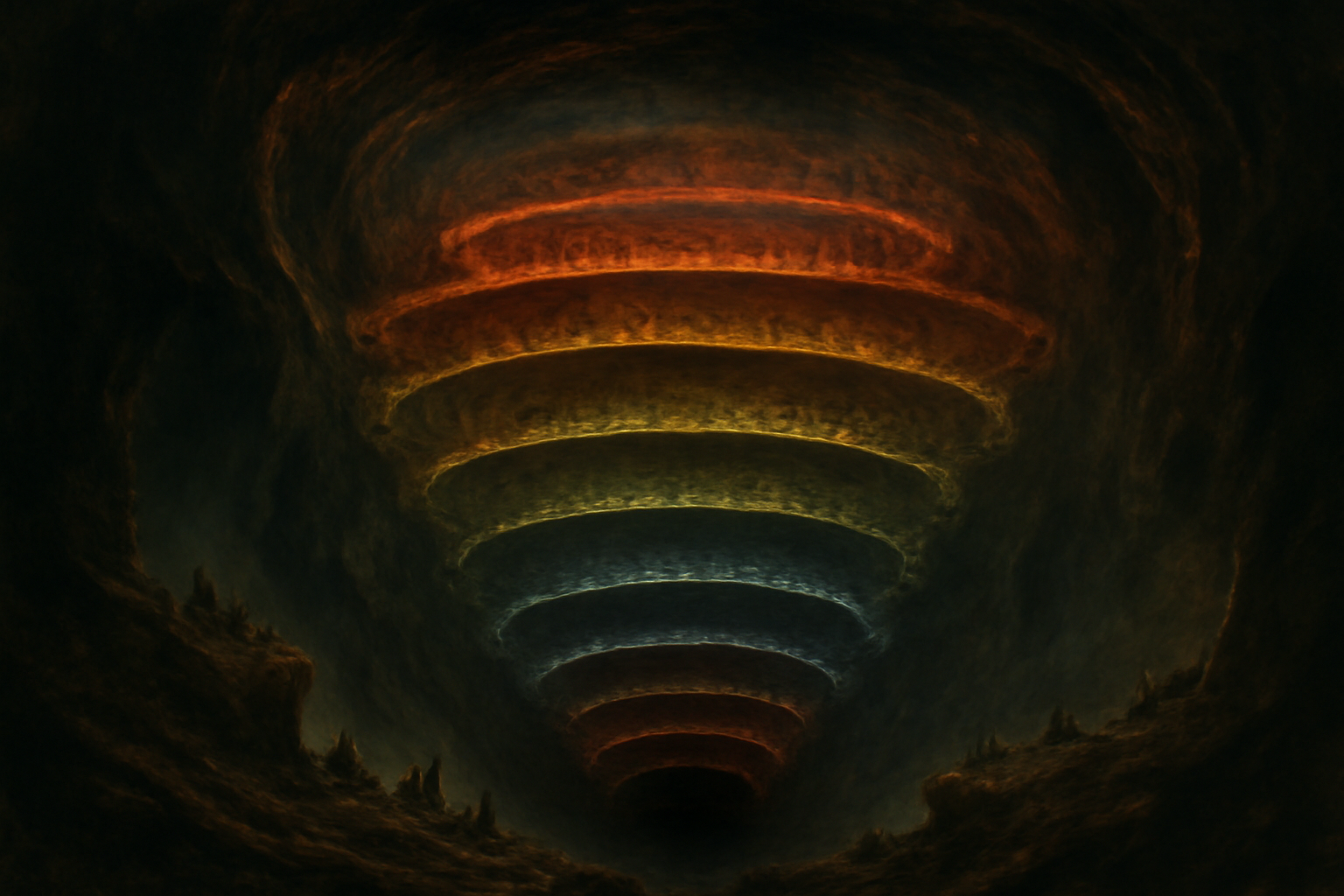
Dante Alighieri wrote the Inferno in the early 1300s. His medieval vision of Hell shaped how the West imagines damnation. Before Dante, Hell was abstract theology. After him, it became vivid, specific, and unforgettable. Every circle has its own logic, its own torment, and its own moral lesson. Understanding these nine circles means understanding one … Read more

The Spiritual Meaning of Dante’s Inferno: Why the Way Down Is the Way Up

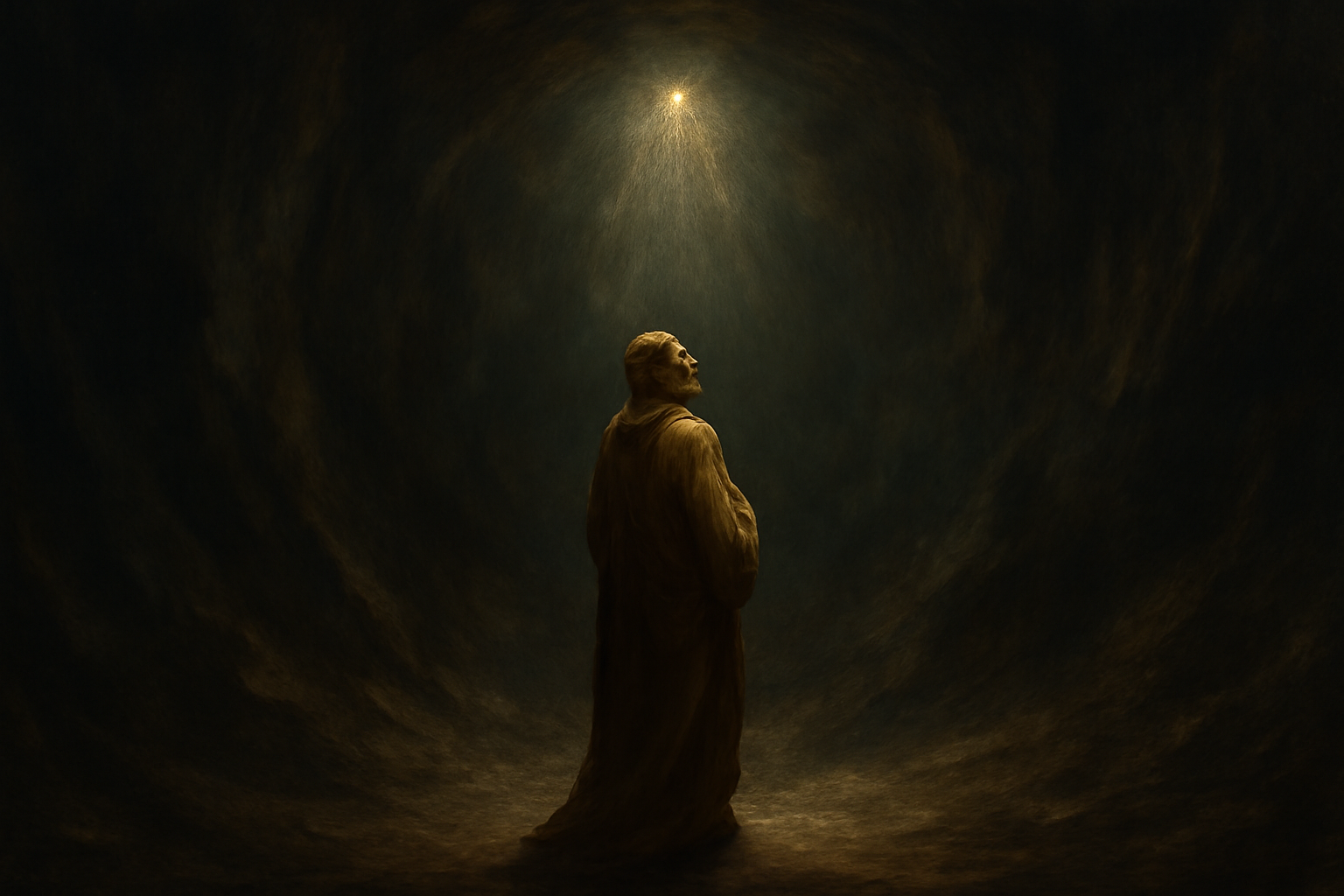
A figure at the lowest point of Hell looking upward toward distant stars — the spiritual turning point in Dante's Inferno

“`html Dante Alighieri’s Inferno is often misread as a medieval torture catalog—a sensationalized inventory of punishment and pain. But this interpretation misses the poem’s spiritual architecture entirely. The Inferno is not Dante’s destination. It is his diagnosis. And like any honest diagnosis, it wounds before it heals. What makes the spiritual meaning of Dante’s Inferno … Read more

Contrapasso: How Every Punishment in Dante’s Inferno Fits the Sin

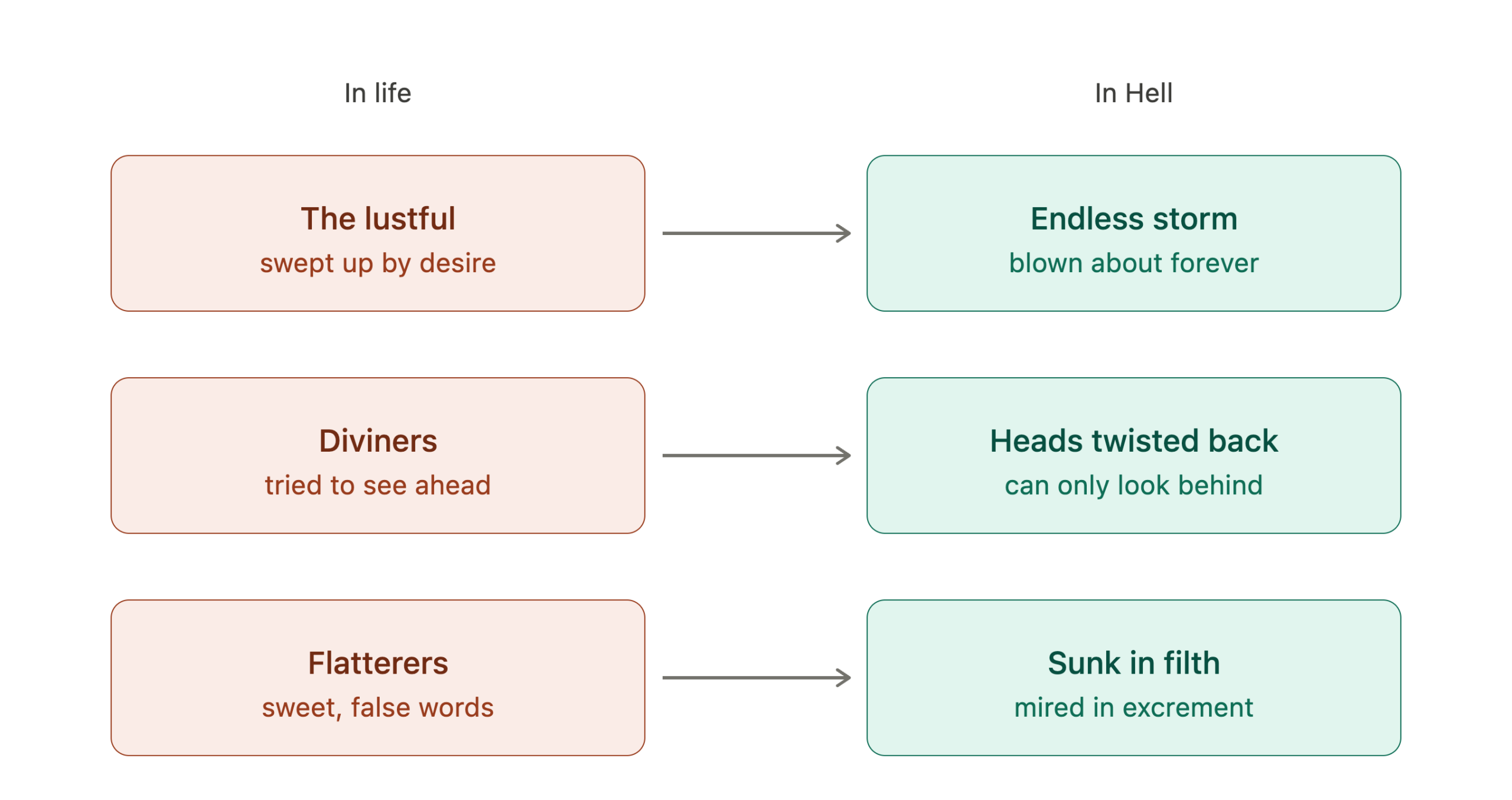
Diagram showing three examples of contrapasso: the lustful blown by storms, diviners with heads twisted back, flatterers sunk in filth

Dante Alighieri’s Inferno is many things: visionary epic, theological argument, political revenge fantasy. But its true genius lies in a single organizing principle—one that transforms the entire poem into a work of profound moral imagination. That principle is contrapasso. The word comes from Latin: “contra” (against) and “patior” (to suffer). Contrapasso means this: each sinner’s … Read more

Satan in Dante’s Inferno: The Frozen Ninth Circle and the Three-Faced Devil

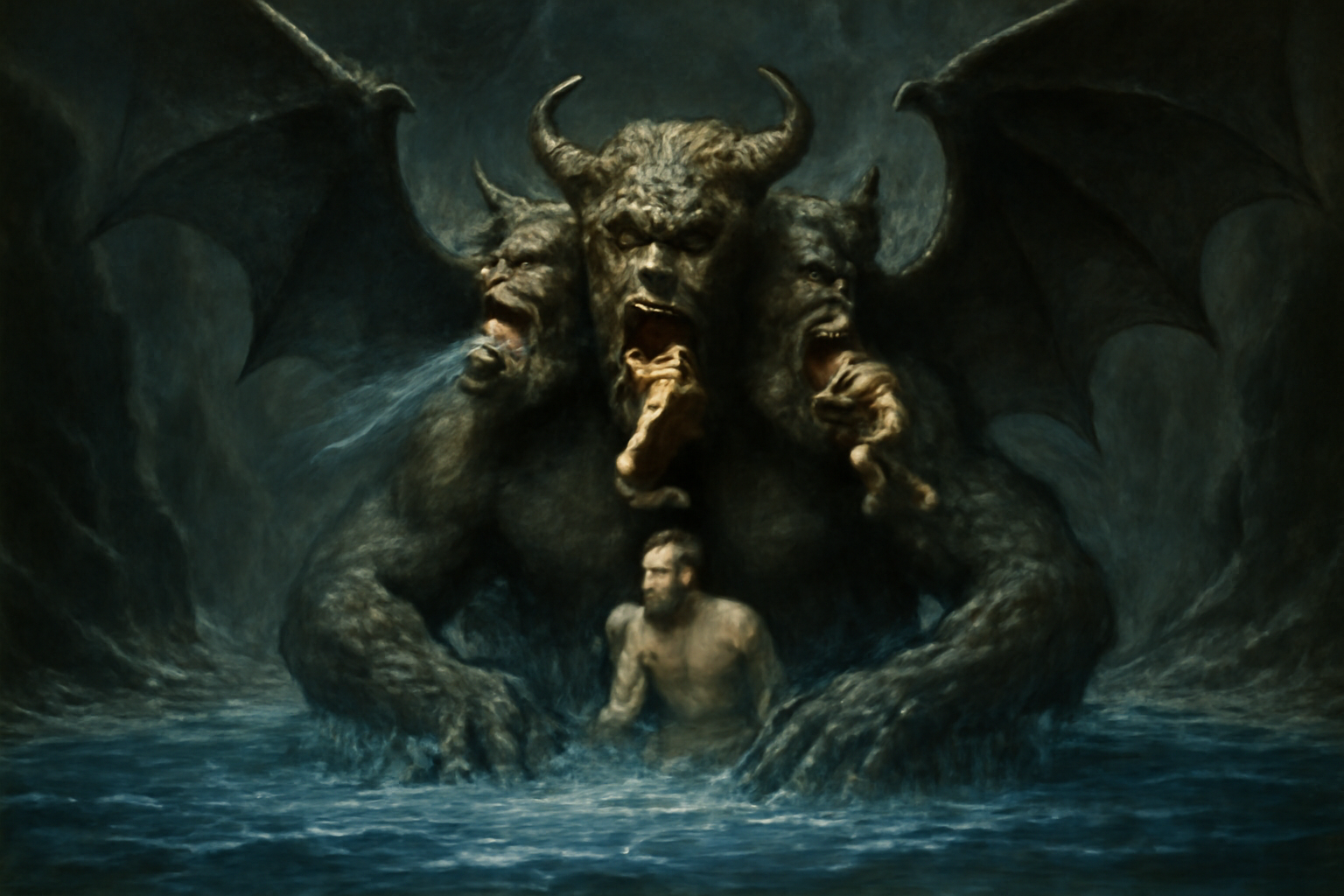
Satan in Dante's Inferno: The Frozen Ninth Circle and the Three-Faced Devil

When most people imagine Hell, they picture flames. Sulfurous pits. Demons with pitchforks. Fire, fire, everywhere. Dante Alighieri had a radically different vision. In his epic poem The Divine Comedy, the deepest, most terrible circle of Hell is not blazing—it is frozen solid. Cocytus, the ninth circle, is a lake of ice. And the further … Read more

A Beginner’s Guide to Dante’s Inferno: The Full Plot Summary (Canto by Canto)

A Beginner's Guide to Dante's Inferno: The Full Plot Summary (Canto by Canto)

Dante’s Inferno is one of the most influential works in Western literature. It’s the first part of a three-part epic called the Divine Comedy. Written in the early 1300s by Italian poet Dante Alighieri, it remains surprisingly relevant and gripping today. The poem blends theology, politics, and personal emotion into a single narrative. Think of … Read more

“Abandon All Hope, Ye Who Enter Here”: The Meaning Behind Hell’s Most Famous Inscription

"Abandon All Hope, Ye Who Enter Here": The Meaning Behind Hell's Most Famous Inscription

Dante Alighieri stands before a gate. Behind it lies Hell itself. The inscription carved into that threshold has echoed through seven centuries of Western culture, appearing in everything from video games to political cartoons. Yet few readers know what the full inscription actually says—or why a single line from it became perhaps the most quoted … Read more

Chapter 16: The Crystal Oasis and a Cactus Who Smiled

Ollie and Biscuit — Chapter 16, scene 1

The gods of any mythology aren’t arbitrary — they’re a direct map of what a society considered most powerful, most unpredictable, and most worth appeasing. Spend enough time with any pantheon and you’ll understand more about the culture that created it than almost any other source. What strikes me every time I dig into a legendary world like this one is how the guardian figures — the threshold protectors, the ones you have to face before you reach the sacred center — are almost never simple villains; in Mesopotamian myth, in Celtic tradition, in the great hero cycles of Mesoamerica, the being standing between the hero and the prize is usually wounded, carrying a grief the world gave them before the hero ever arrived. Captain Cactus, presiding over what the lore frames as a Crystal Oasis — a classic liminal space, a place of impossible abundance at the edge of a wasteland — fits squarely into that archetype of the sorrowful sentinel, the guardian whose hostility is really a disguised cry for someone to finally see them clearly. That’s not a game mechanic or a narrative convenience; that’s one of the oldest storytelling structures humans have ever produced, and it’s worth slowing down to appreciate exactly why it still hits so hard.

“Ready?” Biscuit whispered beside me. She had her backpack clasped shut, her lucky button right on top where she could reach it. She’d been carrying that button since Chapter Five without ever once using it sensibly, but tonight I noticed her fingers weren’t even hovering over it nervously. She looked calm. Decided.

I nodded. “I have a plan,” I said.

Biscuit’s jaw dropped so far it nearly hit the sandstone floor. “You have — I’m writing this down —”

“Biscuit.”

“Right. Yes. Let’s go.”

Ollie and Biscuit — Chapter 16, scene 1

This post contains affiliate links. As an Amazon Associate, I earn from qualifying purchases at no extra cost to you. If Chapter 16 had you dreaming about building your own Crystal Oasis at home, the TerraGreen Creations Succulent Planter Kit is honestly the perfect place to start. It comes with everything — succulent soil, gravel, pebbles, and moss — so you can layer up a tiny desert world that looks like it was pulled straight out of this chapter. I love that it’s beginner-friendly but still feels like a real crafting quest with multiple materials to work with.

Read more

Chapter 15: Captain Cactus Hears a Song

Ollie and Biscuit — Chapter 15, scene 1

Legendary races and peoples — whether in ancient texts or richly constructed fantasy worlds — always reflect something real about how the culture that created them thought about difference, hierarchy, and belonging. That’s what makes studying them so rewarding: you’re always reading two things at once. In Chapter 15, as our narrator and Captain Cactus move through the interior of a vast, obsessively ordered fortress — shelves of diamonds sorted by size, wool by colour, iron stacked with almost ritualistic precision — we’re not just watching a heist unfold; we’re stepping into a space that feels genuinely mythic, the kind of hoard-hall that echoes through legendary traditions from the treasure-mountains of Norse dwarves to the catalogued riches of dragon lairs in medieval romance. The song Captain Cactus hears in this chapter matters precisely because of where it’s heard: inside a place built on theft and enforced order, a song represents exactly the kind of disruption that legends have always used to signal that something deeper — something destabilizing and true — is about to surface. This is the chapter where the world-building stops being backdrop and starts being argument, and I think it’s worth slowing down to appreciate just how much is happening here.

“The vault has to be deeper in,” Biscuit murmured, consulting the list she’d started writing the moment we entered. It was already three pages long. “The shade crystals we collected should help mask our heat signatures from the Sand Minions, but we need more time. Significantly more time.” She looked at me in a way that meant she had seventeen plans but none of them were quite right yet.

That’s when we heard him.

Ollie and Biscuit — Chapter 15, scene 1

This post contains affiliate links. As an Amazon Associate, I earn from qualifying purchases at no extra cost to you. If Captain Cactus has officially stolen your heart, you NEED the Aurora® Palm Pals™ Prickles Cactus™ Stuffed Animal sitting on your desk while you read. This tiny 3.5-inch green buddy is basically a miniature Captain Cactus — small enough to fit in your pocket on adventures, collectible enough to display proudly on a shelf. I love recommending Palm Pals because they’re genuinely well-made and ridiculously cute. Perfect for any young fan who wants their own prickly sidekick.

Read more